Network Design & Engineering in DFW
A business network that works well is invisible. One that was designed wrong, or grew by accretion, is a constant source of slowdowns, security gaps, and unplanned downtime. Adaptive IP Services designs, builds, and tunes business networks from the ground up, and inherits ones that need order brought to them.

What we do
We handle the full stack of business networking: physical infrastructure, wireless, WAN, firewall and segmentation policy, performance, and redundancy. Whether you are wiring a new office, consolidating sites onto SD-WAN, or trying to find out why your VoIP calls drop every afternoon, we scope the problem, design a solution that fits the environment, and execute it.
Network design is not the same as network security, though they share a foundation. Where a project requires deep cybersecurity work, threat detection, compliance frameworks, SOC-level monitoring, Adaptive's security division handles that layer. The two practices coordinate when a project touches both.
What's included
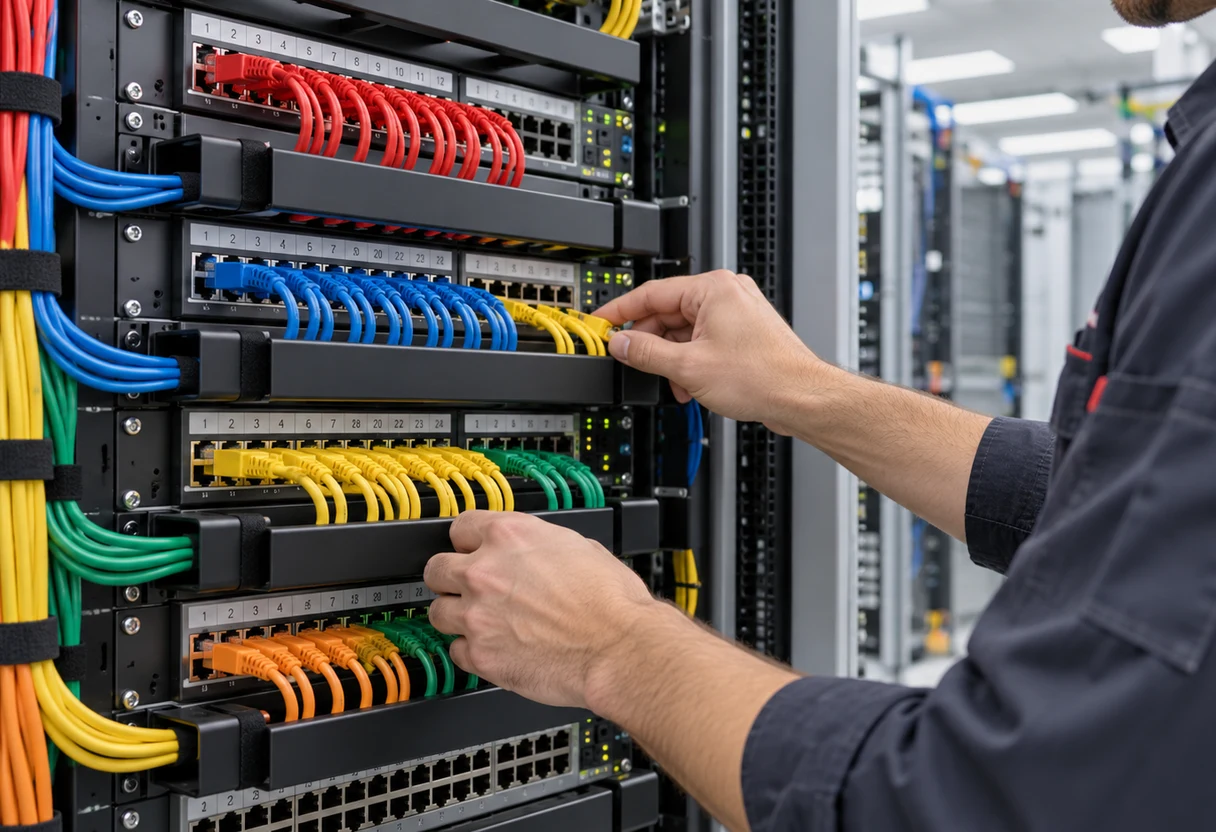
Wired LAN and structured cabling
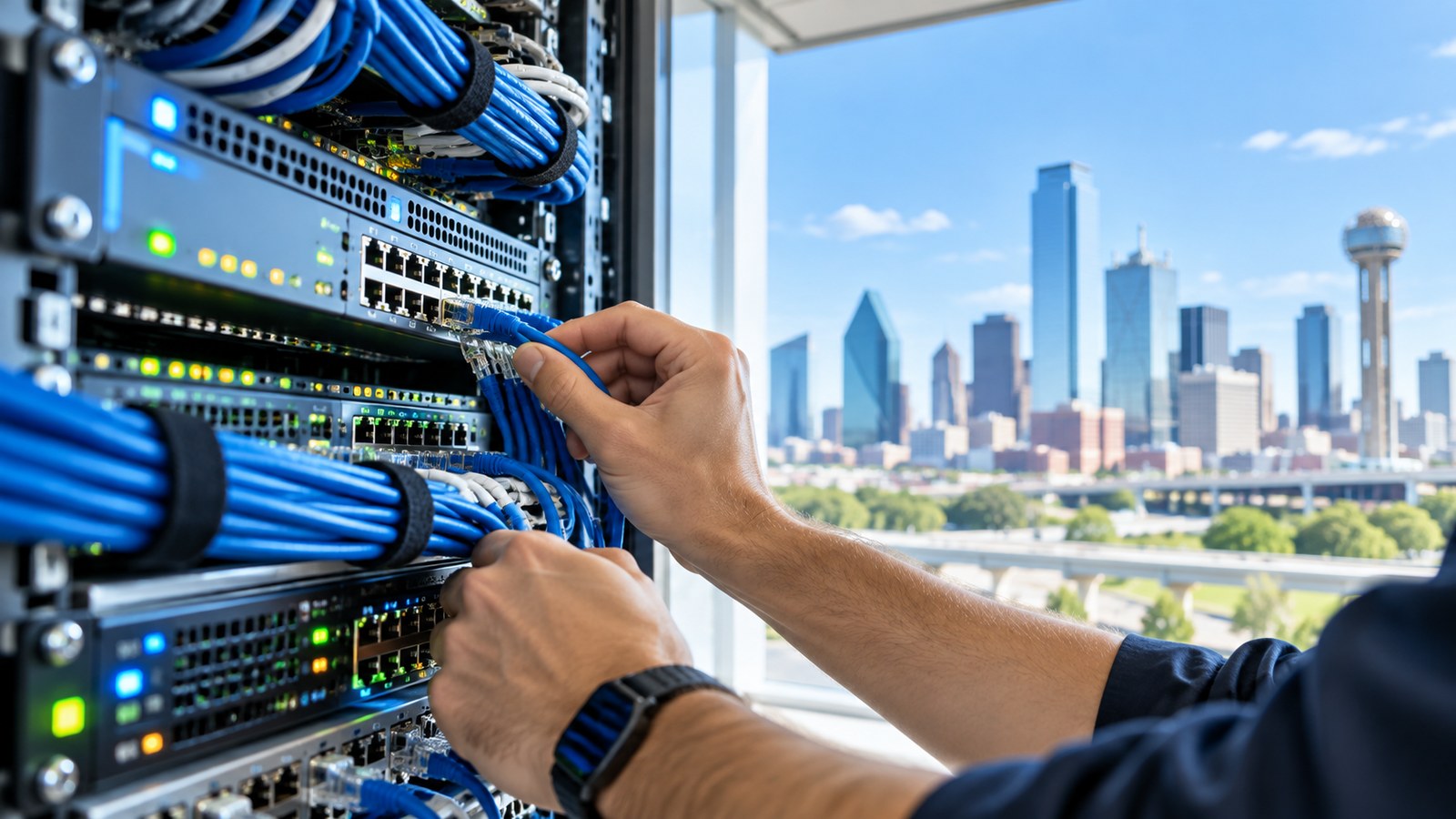
A clean physical plant is the prerequisite for everything else. We design and specify wired LAN topologies, switching architecture, and structured cabling layouts (Cat6/6A, fiber) for new builds, renovations, and retrofits. That includes rack and patch-panel design, cable-plant documentation, and working with low-voltage contractors to spec and validate the run.
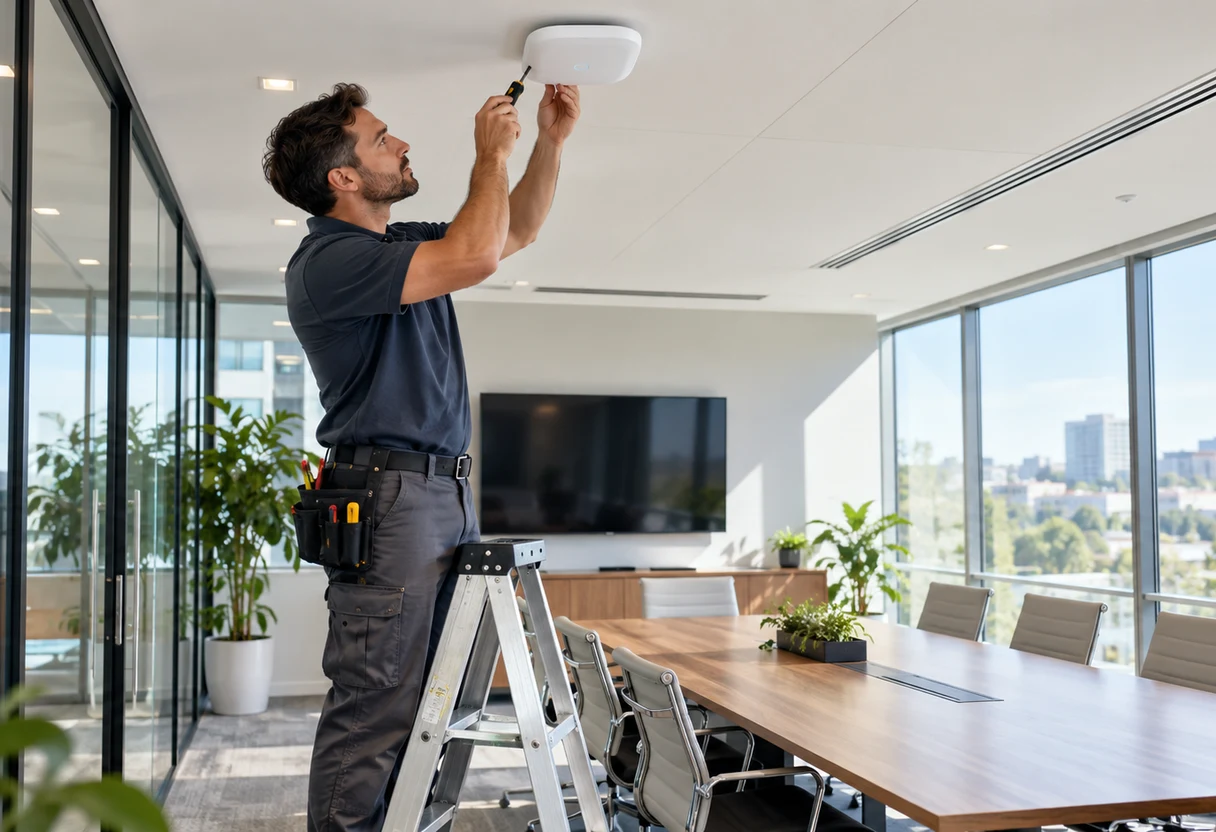
Business wireless (WLAN)
Consumer-grade access points in a business environment create coverage holes, interference, and authentication headaches. We design enterprise WLAN deployments, site surveys, AP placement, channel and power planning, SSID architecture, for offices, warehouses, multi-floor buildings, and outdoor areas. We configure proper 802.1X or pre-shared key policies, guest isolation, and roaming behavior so wireless behaves like infrastructure, not an afterthought.
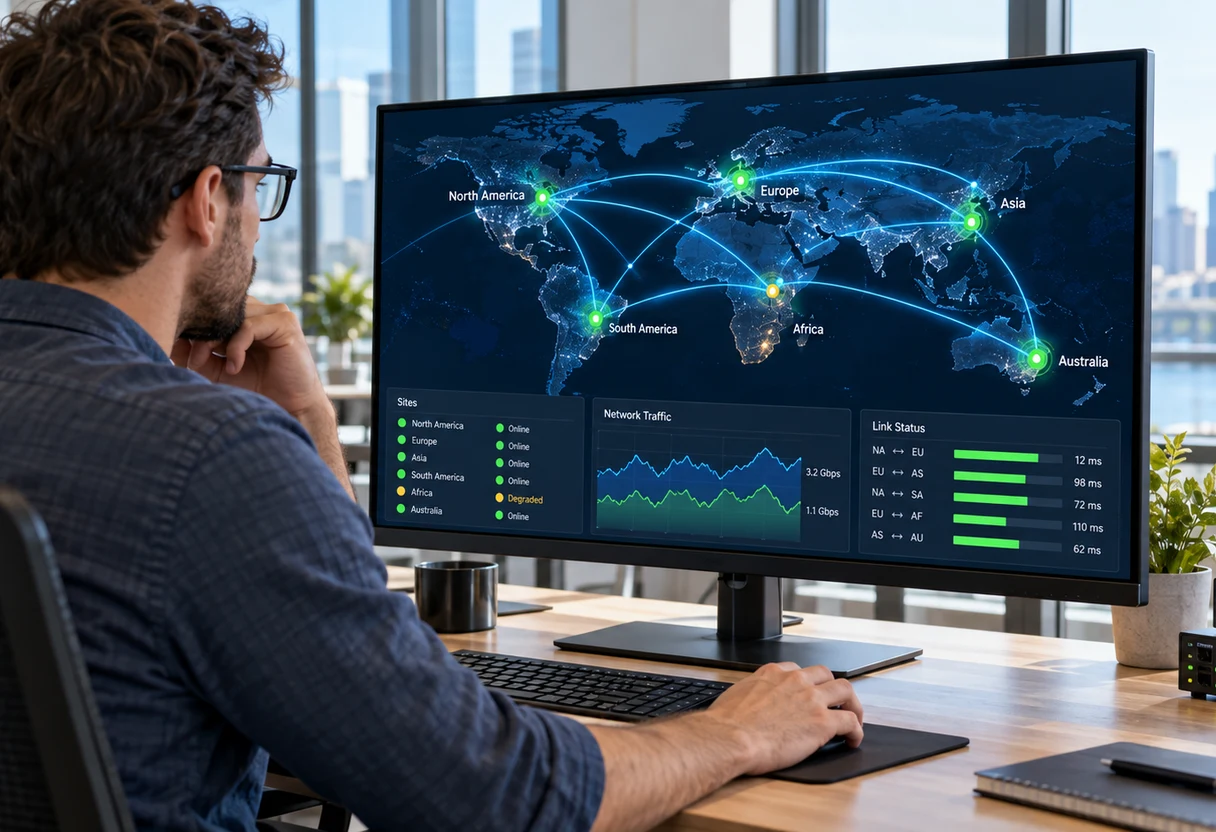
SD-WAN and multi-site connectivity
For organizations with two or more locations, site-to-site VPN over a single ISP is a fragile design. We architect SD-WAN solutions that bond multiple internet connections, broadband, fiber, cellular, into an active-active or active-standby fabric with policy-based routing and automatic path selection. Branch offices connect reliably and securely without backhauling all traffic to a central hub unless the design requires it.
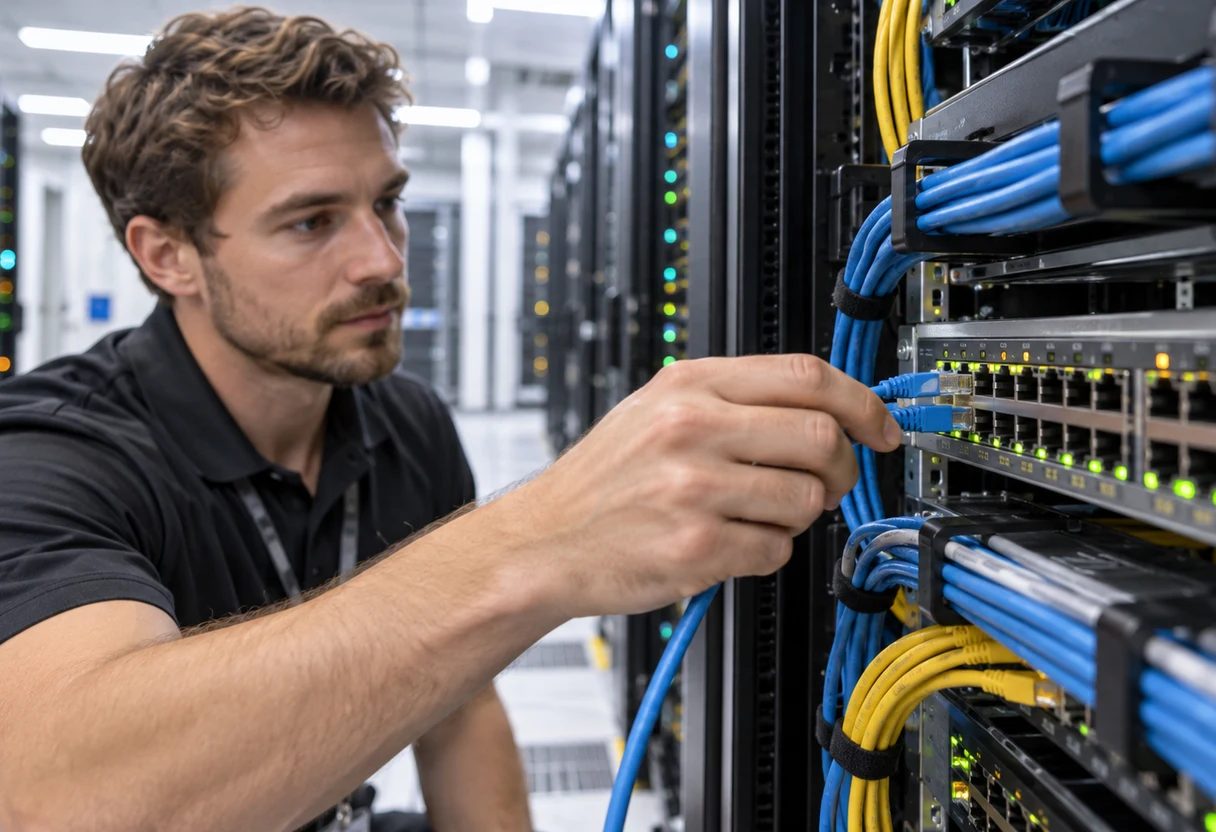
Firewalls and network segmentation
A flat network where every device can reach every other device is an operational and security liability. We design firewall policies and VLAN segmentation strategies that separate workstations, servers, IoT devices, guest traffic, VoIP, and operational technology into logical zones with enforced boundaries. Firewall rule sets are documented, reviewed for implicit-deny correctness, and built so a future administrator can understand and maintain them.

Redundancy, failover, and internet diversity
Single points of failure in a network show up at the worst time. We audit for SPOFs and design redundancy at the layers that matter for your environment: dual ISP with automatic failover, redundant switching paths, uninterruptible power for network equipment, and cellular or satellite as a tertiary option for sites where downtime is not acceptable. Failover is tested, not assumed.

Performance optimization and troubleshooting
Slow networks are often misdiagnosed. The problem is usually not the circuit, it is misconfigured QoS, a duplex mismatch, a spanning-tree anomaly, a saturated uplink, or a miscategorized application. We use packet capture, flow analysis, and systematic baselining to identify the actual constraint. Fixes are targeted, and the root cause is documented so the same problem does not recur.

New office build-outs and relocations
A move or new lease is the best time to get the network right. We scope infrastructure requirements before a lease is signed, spec the cabling plant for the contractor, and design the network architecture in parallel so it is ready when the keys are handed over. We have worked with both the clean-sheet scenario and the situation where an existing network is being transplanted under a deadline.

Capacity planning
Networks that were right-sized three years ago may not be right-sized now. We review current throughput, device counts, application mix, and growth trajectory, and produce a forward-looking capacity assessment: where headroom exists, where it does not, and what the upgrade path looks like. This is grounded in traffic data rather than vendor sales literature.

Secure remote access and VPN
Remote and hybrid work is a permanent part of most organizations' operating model. We design and deploy remote access solutions, site-to-site and client VPN, zero-trust network access where appropriate, that authenticate users properly, restrict access to what they need, and do not expose the internal network broadly. Split tunneling, MFA integration, and policy enforcement are part of the design, not add-ons.
Who it's for
This service is built for DFW businesses that have outgrown their current network or need to build one the right way from the start.
You are a good fit if:
- You are opening a new office or relocating and need infrastructure designed before the move, not after
- You have multiple locations that are not well-connected or rely on a single ISP with no failover
- Your network grew organically and nobody is sure what it actually looks like or why parts of it behave the way they do
- You are dealing with recurring performance or reliability problems that internal troubleshooting has not resolved
- You are planning to add a large number of devices, a new application workload (VoIP, surveillance, point-of-sale), or a wireless deployment and want the network prepared for it
- Your IT team handles day-to-day support but does not have dedicated network engineering depth for a complex project
Adaptive works on-site in DFW and remotely for clients outside the area. Engagements are project-based, fractional, or ongoing, there is no requirement to sign a long-term contract to get solid work done.
What you can expect
Assessment before prescription. We do not propose a solution before we understand the environment. Engagements typically start with a discovery phase: reviewing existing documentation (or building it if none exists), interviewing stakeholders, and capturing traffic and configuration data. Recommendations come from that process, not from a standard template.
Documentation that outlasts the engagement. Network changes are documented as they are made. At the end of a project, you have an accurate network diagram, a configuration record, and runbook notes that your internal team or a future contractor can use. The goal is to leave the environment in better shape than we found it, and to leave you less dependent on any single person's undocumented knowledge.
Honest scope management. If a project is more involved than it appeared at first, we tell you early and explain why. If a proposed approach has meaningful trade-offs, we surface those before the work starts rather than after.
No oversized engagement. Not every network problem requires a full redesign. If the issue is a misconfigured switch or a policy gap that can be resolved in a few hours, that is what we scope. If it requires a ground-up architecture, we scope that instead. The size of the engagement matches the actual problem.
Frequently asked questions
Do you handle both the physical cabling and the network configuration?
Yes. We cover the full stack: structured cabling and switching (Cat6/6A, fiber, rack and patch-panel design), business wireless, SD-WAN and multi-site connectivity, firewall and VLAN segmentation, redundancy, and performance tuning. We also coordinate with low-voltage contractors on the cable plant.
Our network is slow but nobody knows why. Can you find the cause?
Usually, yes. Slow networks are often misdiagnosed as a circuit problem when the real cause is a duplex mismatch, misconfigured QoS, a spanning-tree anomaly, or a saturated uplink. We use packet capture, flow analysis, and systematic baselining to find the actual constraint and document the root cause so it does not recur.
We are opening or relocating an office. When should we bring you in?
Before the lease is signed if possible. A move is the best time to get the network right. We scope infrastructure requirements early, spec the cabling plant for the contractor, and design the architecture in parallel so it is ready when you get the keys.
Is network design the same as cybersecurity?
They share a foundation but are not the same. We design the network, including firewall policy and segmentation. Where a project needs deep security work, threat detection, compliance frameworks, or SOC-level monitoring, Adaptive's security division handles that layer, and the two practices coordinate when a project touches both.
Do we have to sign a long-term contract?
No. Engagements are project-based, fractional, or ongoing, and there is no requirement for a long-term contract to get solid work done. Not every problem needs a full redesign; if the fix is a misconfigured switch, that is what we scope.
Let's get your network right
Whether you are building a new office, connecting multiple sites, or chasing down a recurring performance problem, we scope the actual issue and fix it.
Or email: info@adaptiveips.com