Business VoIP & Unified Communications in DFW
Most DFW businesses are still running phone infrastructure that was designed for a fixed office and a predictable headcount. When remote workers, acquired locations, and Teams-first workflows collide with an aging on-prem PBX, the result is call quality problems, expensive carrier contracts, and an IT team managing hardware that the vendor quietly stopped supporting. Adaptive IP Services designs and implements modern voice and unified communications environments, hosted, hybrid, or fully cloud-delivered, built around how your business actually operates.

What we do
We handle the full lifecycle of business voice: assessing what you have, designing what you need, migrating without losing service continuity, and tuning the network underneath so calls actually sound right. That covers everything from replacing an end-of-life on-prem PBX with a hosted cloud phone system, to deploying Microsoft Teams Phone as your organization's primary voice platform, to standing up a contact-center environment with IVR, queuing, and reporting. If your carrier contracts are a tangle of legacy SIP trunks and analog lines, we sort those out too, including number porting, DID management, and E911 configuration that meets current compliance requirements for your physical and remote locations.
We work with the major UCaaS platforms and SIP providers rather than being locked to one vendor's ecosystem. That matters because the right platform for a 20-person professional services firm in Plano is not the same as the right platform for a 150-seat contact center in Irving. We match the solution to the requirement, not the other way around.
What's included
- Hosted PBX and cloud phone system deployment, design, provisioning, and end-user rollout for cloud-delivered business phone platforms; no on-prem call server hardware required
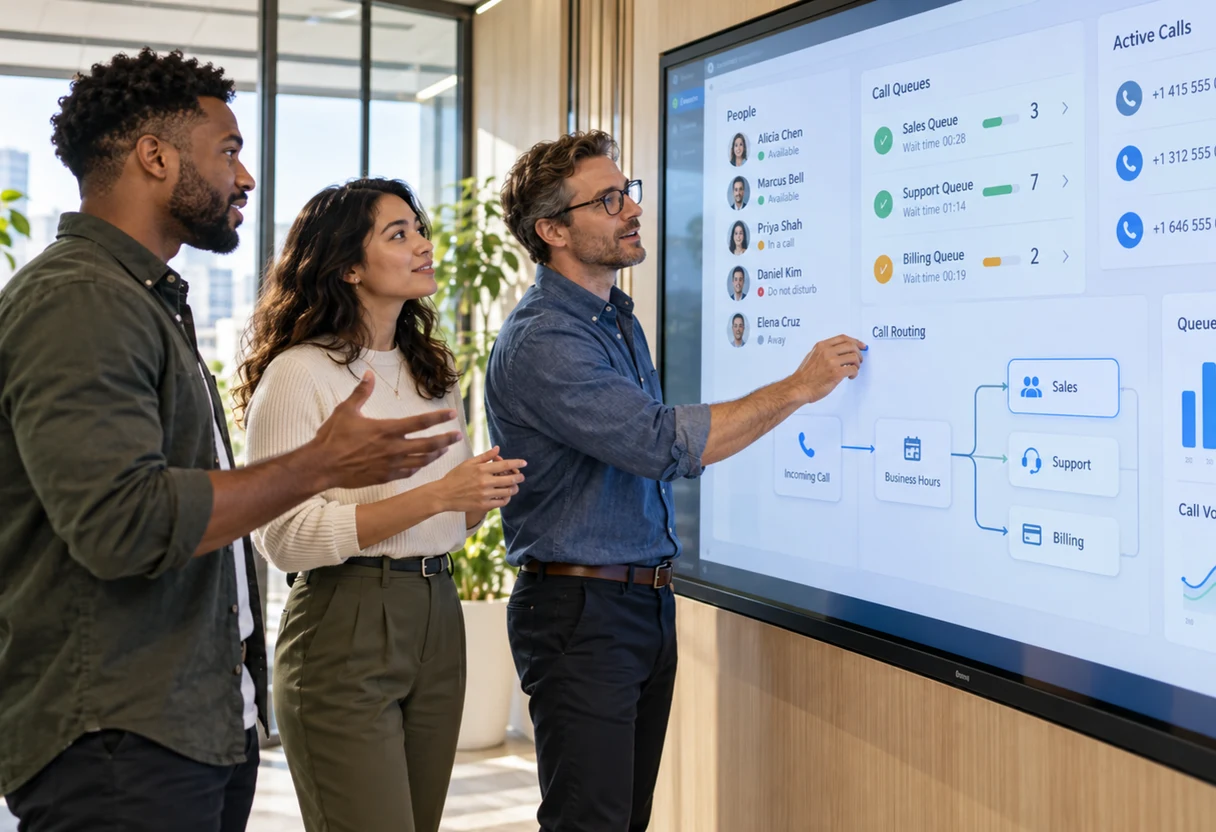
- Microsoft Teams Phone / Teams Voice, Direct Routing or Operator Connect configuration, dial-plan design, auto-attendants, call queues, and policy configuration within your existing Microsoft 365 tenant
- SIP trunking design and carrier management, selection, provisioning, and cutover of SIP trunk services; replacement of legacy analog lines and PRIs; capacity planning based on concurrent call modeling
- UCaaS platform evaluation and migration, vendor comparison, feature-to-requirement mapping, and phased cutover planning to move from on-prem PBX (Cisco, Avaya, Mitel, NEC, or similar) to a cloud platform without a hard-down migration window
- Contact center and call queue configuration, IVR/auto-attendant scripting, ACD queue design, agent skill routing, supervisor reporting, and basic CRM integration for inbound and outbound call flows
- Number porting and DID management, coordinating local number portability (LNP) requests with carriers, managing porting timelines, and maintaining your existing numbers through any platform change
- E911 compliance, Kari's Law and RAY BAUM'S Act configuration for multi-line telephone systems (MLTS), including dispatchable location records for remote and mobile workers
- Softphone and mobile worker enablement, endpoint deployment for desktop softphones, mobile apps, and physical IP phones; configuration for remote workers connecting over VPN or direct internet
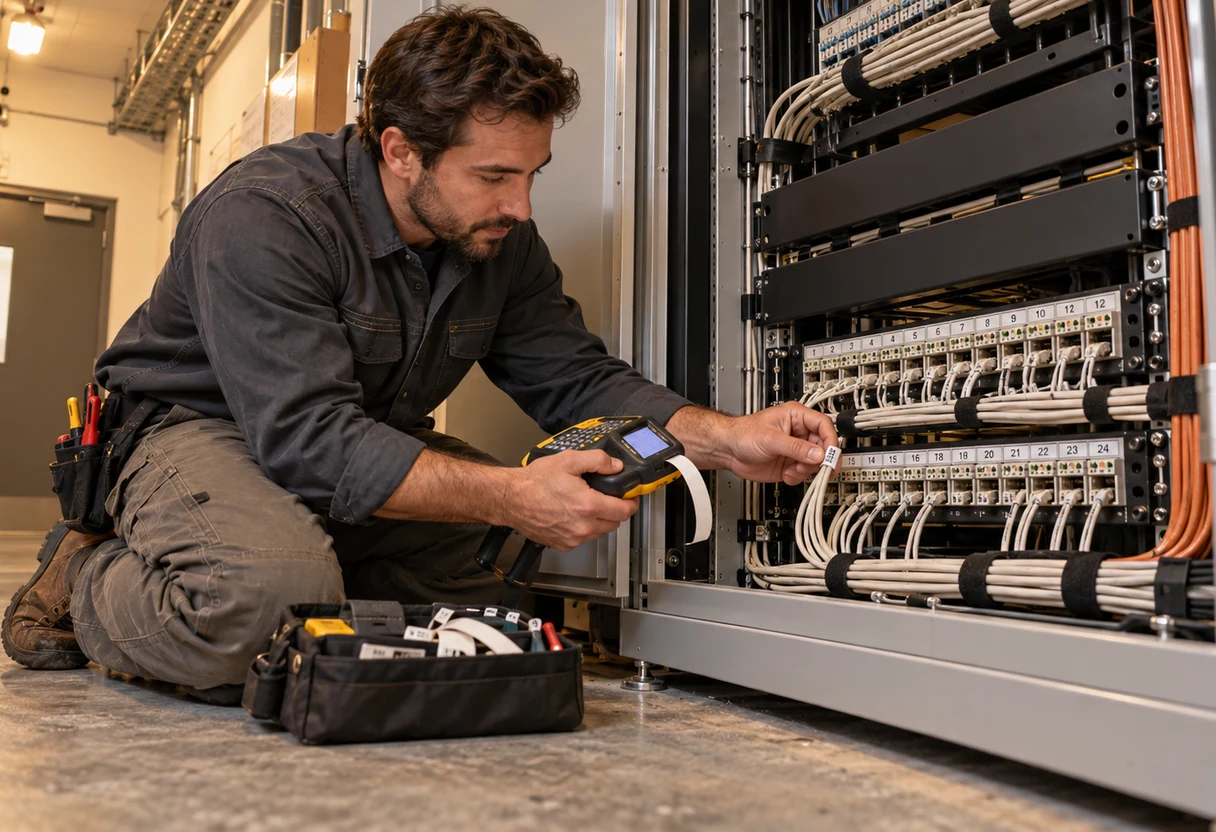
- QoS and network readiness for voice, LAN/WAN configuration review, DSCP marking, traffic prioritization, and bandwidth assessment to support voice quality standards before and after cutover
- Call recording and compliance configuration, where required, design and deployment of call recording integrated with your UCaaS platform, with retention and access-control policies aligned to your compliance requirements
- Ongoing administration and moves/adds/changes, post-deployment support for user changes, new locations, and platform updates, available on a project or ongoing basis
Who it's for
This practice area is most relevant to DFW businesses in the following situations:
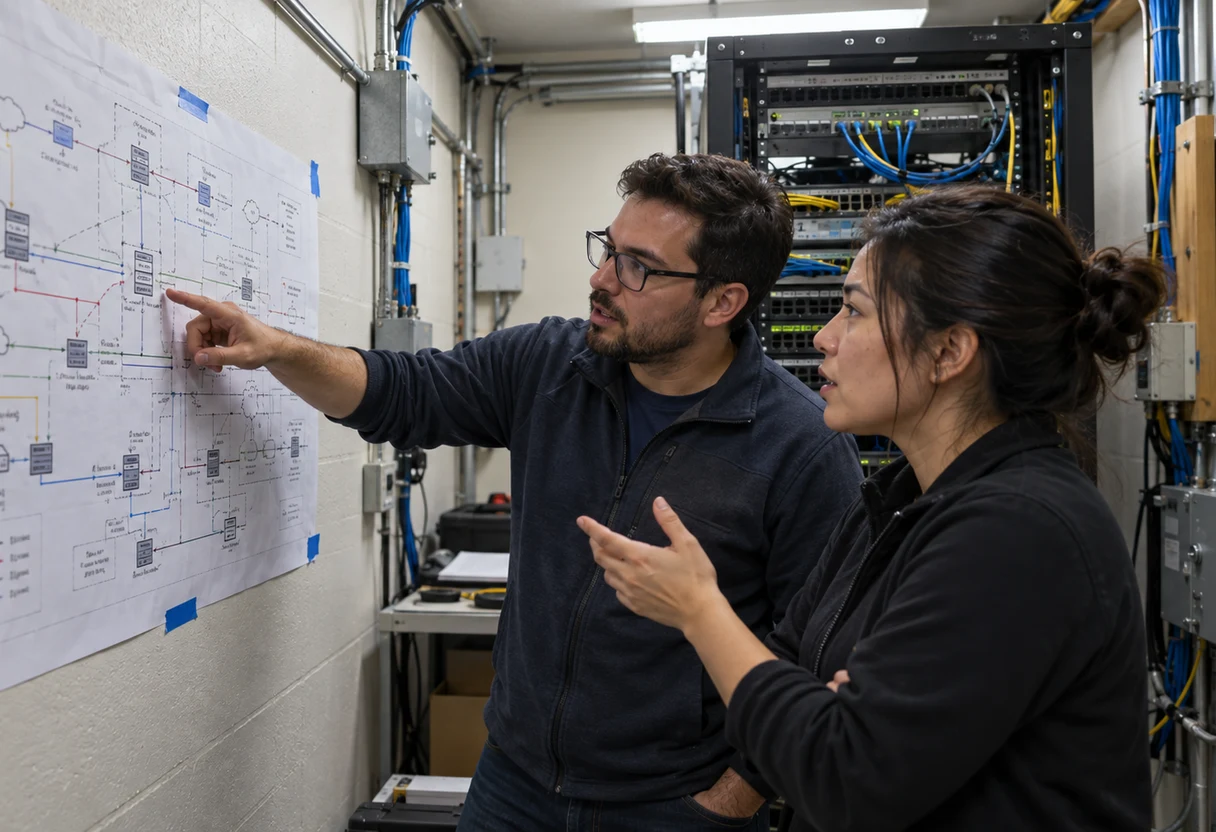
You're still on an on-prem PBX that's reaching end-of-life. Cisco Unified Communications Manager, Avaya IP Office, Mitel MiVoice, and similar platforms eventually stop receiving updates and replacement hardware becomes difficult to source. Staying on aging call server infrastructure is a support and reliability risk that compounds over time.
You've adopted Microsoft 365 but voice is still a separate system. Organizations that standardized on Teams for chat and meetings but kept a separate phone system are maintaining two communication platforms unnecessarily. Teams Phone consolidates voice into the environment your users are already in.

Your workforce is distributed and your phone system wasn't designed for it. A platform built for a physical office becomes a problem when half your team works remotely or across multiple locations. Call quality degrades, E911 records are wrong, and softphone behavior is inconsistent. These are solvable infrastructure and configuration problems.

You're running a contact center on manual processes or consumer-grade tools. Small-to-midsize businesses operating inbound call flows with basic auto-attendants and no queue reporting are leaving visibility on the table. A properly configured contact-center environment does not require enterprise-level budget.
Your carrier contracts are expiring or your SIP setup is underperforming. If you're experiencing one-way audio, dropped calls, or jitter on existing SIP trunks, the problem is usually either the carrier configuration, QoS on the local network, or both. These are diagnosable and fixable before you're locked into another multi-year term.
What you can expect
A voice engagement with Adaptive IP Services starts with an honest assessment of what's in place, carrier contracts, existing hardware, call flow documentation (or the lack of it), and network configuration. We do not assume your current SIP trunk provider is the right long-term fit or that your current platform needs to be replaced wholesale. Sometimes the right answer is tuning what's there; sometimes it's a full migration.
For organizations moving to a new platform, we design cutovers to avoid hard-down windows where possible. Number porting has inherent carrier timelines, but the rest of the transition, provisioning, user configuration, testing, is staged so that voice service is maintained throughout. Users get configured endpoints and working dial plans before the old system goes away.
QoS configuration is part of every voice deployment, not an afterthought. Voice traffic that competes equally with backup jobs and software updates on an unconfigured network will have quality problems regardless of the platform. We address the network layer as part of the voice project.
Post-deployment, you're not handed a configuration document and left to manage a platform your internal team wasn't trained on. Adaptive IP Services is available for ongoing administration, user provisioning, new-location adds, carrier changes, on a project or retained basis. There is no minimum contract size and no requirement to hand over your entire IT environment to get support on voice.
Frequently asked questions
Can you move us from an on-prem PBX to a cloud phone system without downtime?
For most migrations, yes. Number porting has inherent carrier timelines, but the rest of the transition, provisioning, user configuration, and testing, is staged so voice service is maintained throughout. Users get configured endpoints and working dial plans before the old system goes away. We design cutovers to avoid hard-down windows wherever the environment allows.
Do you deploy Microsoft Teams Phone?
Yes. We configure Teams Phone using Direct Routing or Operator Connect within your existing Microsoft 365 tenant, including dial-plan design, auto-attendants, call queues, and policy. If you standardized on Teams for chat and meetings but kept a separate phone system, Teams Phone consolidates voice into the environment your users are already in.
We have call quality problems on our current SIP trunks. Can that be fixed without replacing everything?
Usually. One-way audio, dropped calls, and jitter typically trace to carrier configuration, QoS on the local network, or both. These are diagnosable and fixable. We do not assume your current platform needs a wholesale replacement; sometimes the right answer is tuning what is there rather than a full migration.
Do you handle number porting and E911 compliance?
Yes. We coordinate local number portability requests with carriers and manage porting timelines so you keep your existing numbers through any platform change. We also configure E911 to meet Kari's Law and RAY BAUM'S Act requirements for multi-line telephone systems, including dispatchable location records for remote and mobile workers.
Do we have to hand over our entire IT environment to get help with voice?
No. There is no minimum contract size and no requirement to outsource all of IT to get support on voice. Engagements can be project-based or retained, and we are available for ongoing administration, user provisioning, new-location adds, and carrier changes as needed.

Let's talk about your phone system
If your current phone infrastructure is creating friction, cost, reliability, or operational complexity, we can help you see what a cleaner voice environment would look like.
Or email: info@adaptiveips.com